The Dawn of Practical Quantum Computing: A Seismic Shift in the IT Industry
- Future Tech, Computing
- Exien
- · Updated
Where Does Quantum Computing Stand in 2026?
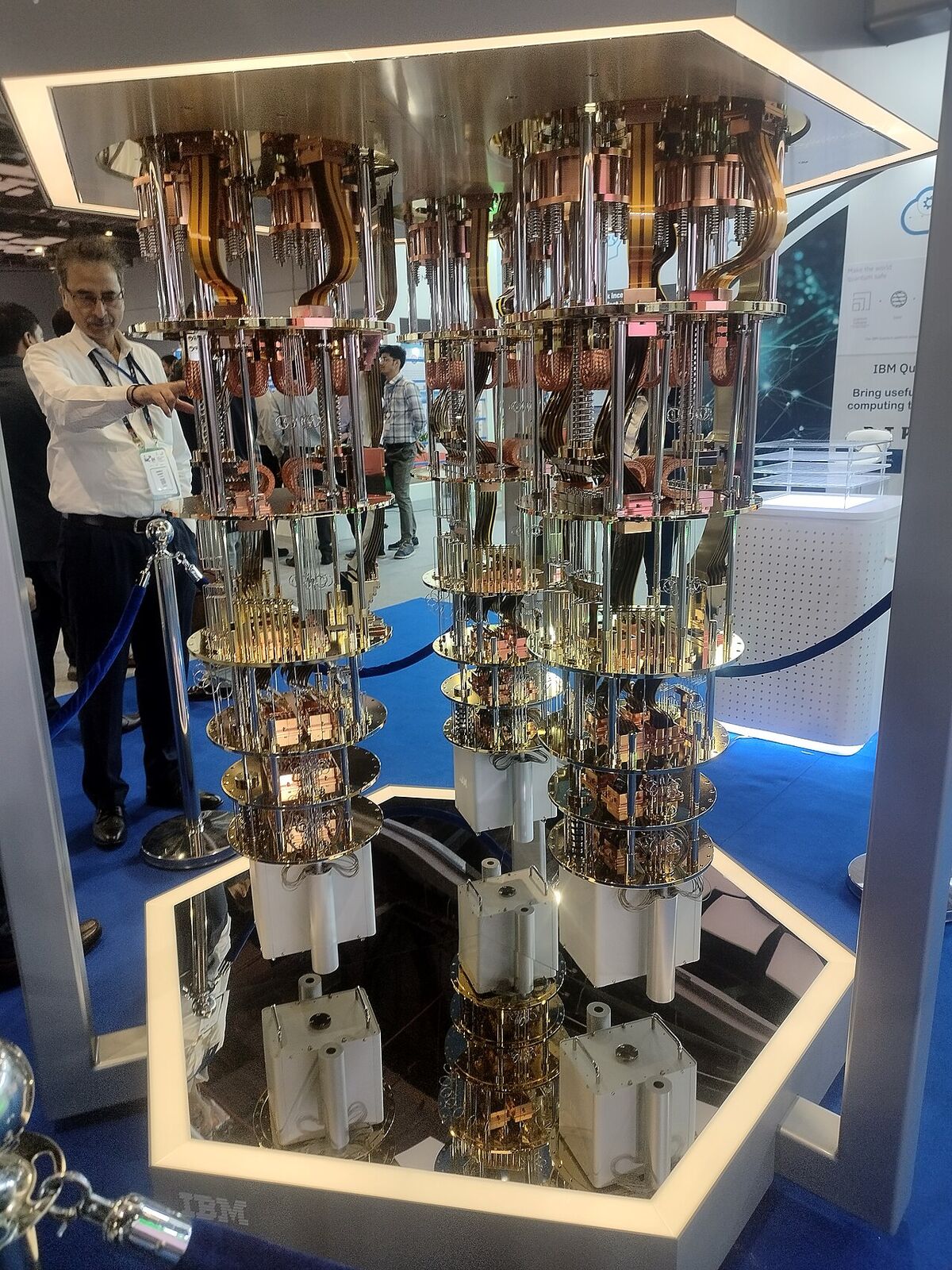
As of 2026, quantum computing is moving out of the lab and into the latter half of the 'NISQ (Noisy Intermediate-Scale Quantum)' era, a stage where limited commercial applications are possible. It will not replace your laptop, but it is set to reshape drug discovery, finance and AI — and it threatens today's encryption, which is why Post-Quantum Cryptography (PQC) migration has become urgent.
For decades, computer technology made remarkable progress by shrinking transistor sizes according to Moore's Law. However, as integration density reaches the atomic level, we are facing physical limitations such as interference between electrons. The concept that emerged to break through these fundamental limits of classical computers is Quantum Computing, which utilizes the principles of quantum mechanics.
Just a few years ago, quantum computers were considered a distant future technology, with people saying "it will take 20 more years of research to be practical." Since then, major IT companies have poured in astronomical investments and achieved technological breakthroughs.
How Are Qubits Different from Classical Bits?
Classical computers use bits, which hold only one of two states, 0 or 1, as the basic unit of information processing. Quantum computers instead use Qubits and rely on two core principles of quantum mechanics: 'Superposition' and 'Entanglement'.
- Superposition: Just like a coin spinning in the air has the states of both heads and tails simultaneously, a qubit can exist in the states of 0 and 1 at the same time. As the number of qubits increases, the amount of information that can be processed simultaneously increases exponentially (2^n). With just 300 qubits, a quantum computer can simultaneously calculate more cases than there are atoms in the universe.
- Entanglement: No matter how far apart two entangled qubits are, if the state of one changes, the state of the other instantly changes. This principle enables ultra-high-speed information transfer and parallel computation between qubits.
Which Industries Will Quantum Computing Disrupt in 2026?
Quantum computing will mainly disrupt fields built on hard optimization and simulation problems. It is unlikely that quantum computers will completely replace classical computers and go into smartphones or laptops. They are not suitable for Excel work or playing YouTube, but they specialize in solving complex optimization problems in a few minutes that would take classical computers tens of thousands of years.
① Drug Discovery and New Materials Discovery (Chemistry and Pharmaceuticals)
Developing new drugs or innovative battery materials requires simulating the numerous variables that occur when molecular structures bind. Quantum computers can simulate molecular interactions in the natural world exactly at the quantum level, making them a core technology that could change the game in healthcare by shortening the discovery period for drug candidates from years to weeks.
② Financial Optimization and Risk Management
Movements in financial markets, portfolio optimization, and fraud detection models are complex optimization problems where numerous variables are intertwined. Quantum algorithms can find optimal answers quickly within massive datasets, helping companies improve ROI and manage risk with precision.
③ Accelerating AI Machine Learning Model Training (Quantum AI)
Quantum AI is the field where quantum computing and artificial intelligence combine. Quantum algorithms can drastically reduce the massive time and energy consumed in training AI models with vast parameters, potentially bringing the arrival of Artificial General Intelligence (AGI) forward.
What Is Q-Day and Why Does Post-Quantum Cryptography Matter?
Q-Day is the day when attackers use quantum computers to collapse existing encryption systems, and Post-Quantum Cryptography (PQC) is the defense being prepared against it. Most internet banking, cryptocurrency, and military communications today use the RSA encryption method, which relies on the fact that prime factorization takes an astronomical amount of time for classical computers.
Using 'Shor's Algorithm' on a quantum computer, however, this encryption system can be neutralized in just a few minutes. So while quantum computing is a great blessing for humanity, it also poses a fatal threat to modern cybersecurity. To prepare for 'Q-Day', the US National Institute of Standards and Technology (NIST) has led standardization of Post-Quantum Cryptography (PQC)—based on mathematical puzzles difficult even for quantum computers to solve. As of 2026 that work has reached its final stage, making infrastructure migration by governments and the financial sector worldwide an urgent task.
What Should Organizations Do Now?
Organizations should stop watching and start preparing: nurture quantum talent and set up PQC migration roadmaps now. Just as artificial intelligence developed slowly and then exploded with the advent of deep learning and ChatGPT, quantum computing is currently very close to a Tipping Point.
IT leaders in enterprises and national policymakers can no longer dismiss quantum computing as something out of a sci-fi movie. Proactively preparing for upcoming security threats is how they can lead the paradigm shift expected to arrive within a decade.