How Do You Open a Closed Pistachio Without Hurting Your Teeth?
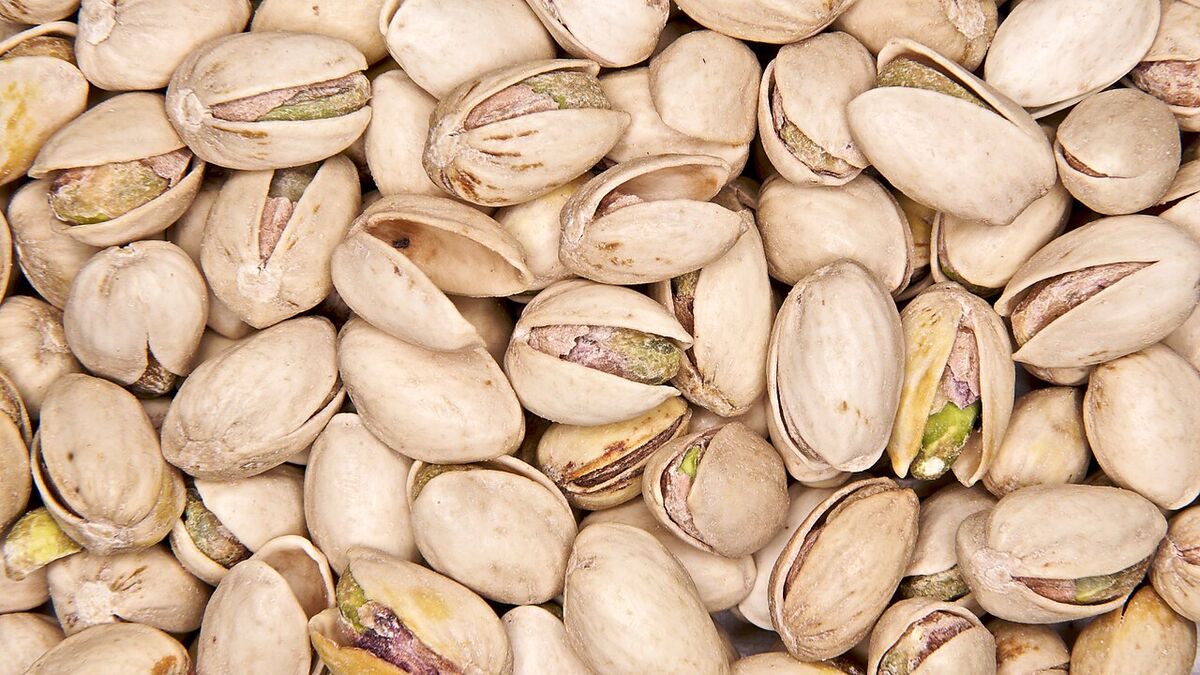
Use half of an empty pistachio shell as a lever: push its edge into the narrow split and twist. That's the method Wonderful Pistachios recommends in its FAQ, along with a plain warning never to open pistachios with your fingernails or teeth. If a pistachio has no split at all, it didn't open on the tree, and roasting it again won't change that.
How do you open a pistachio that's only slightly cracked?
Use an empty half-shell as a wedge. The steps:
- Pick up a half-shell from your discard pile and hold it by the rounded end.
- Push its pointed edge into the gap of the closed pistachio as far as it will go.
- Twist the half-shell like a key in a lock. The leverage forces the two halves apart.
- If the edge won't go in, run it along the seam to find the widest point of the gap and try there.
The tool is always within reach while you're snacking, and its thin edge fits a gap that's too small for a fingertip.
Why not use your teeth or fingernails?
Because both can get hurt, and a shell does the job better. Wonderful Pistachios explicitly tells people never to open pistachios with fingernails or teeth. A tight shell puts concentrated pressure on a small spot, which is exactly how a nail splits or a tooth chips. A half-shell, a butter knife, or a nutcracker takes that force instead.
Why are some pistachios completely closed?
Most fully closed pistachios simply didn't mature enough to split on the tree. The UC Davis Postharvest Research and Extension Center lists shell splitting as one of the signs that a pistachio is mature: with normal ripening the shell splits open while the outer hull stays intact. Nuts whose shells stay closed after harvest may be immature, with smaller, lower-quality kernels.
Because nuts on the same tree ripen unevenly, UC Davis notes that the ideal harvest time is when 70 to 80 percent of the fruits are mature, so some unripe, closed nuts inevitably end up in the batch.
A common belief is that closed pistachios are the ones that didn't pop open during roasting, but that's not how it works. Wonderful Pistachios states that the opening isn't caused by roasting, so re-roasting closed pistachios won't open them.
What should you do with a closed pistachio?
It depends on whether there's any gap at all.
| What you see | What to do |
|---|---|
| A thin split along the seam | Twist it open with an empty half-shell |
| No visible gap | Crack it with a nutcracker, or set it aside |
| Kernel is shriveled, discolored, or smells off | Throw it away |
| Kernel looks normal, just small | Fine to eat |
Since fully sealed nuts tend to hold smaller kernels, many people just skip them. If you do crack one, check the kernel before you eat it.