Why Are RAM and SSD Prices So High, and When Will They Drop? (November 2026)
RAM and SSD prices are high because memory makers have moved production capacity toward high-bandwidth memory (HBM) and server memory for AI data centers, leaving less DRAM and NAND flash for ordinary PCs and phones. Contract prices are still rising in Q4 2026, and the major memory makers expect supply to stay tight until at least 2027.
Here's why the AI boom reaches all the way to your next PC upgrade, and how to decide whether to buy now or wait, based on published market data.
Why are RAM and SSD prices going up?
RAM and SSD prices are going up because AI data centers are absorbing huge amounts of server memory, and the HBM used in AI chips takes about three times as much silicon wafer per bit as regular DDR5, which squeezes consumer memory output.
According to TrendForce's summary of Micron's explanation, three things are behind the crunch.
First, AI data center build-outs have sent demand forecasts soaring. Big tech companies are racing to add AI servers, which soak up server DRAM and high-capacity enterprise SSDs. TrendForce's September 2026 report says enterprise SSD bit demand is growing more than 80% year over year in 2026.
Second, HBM has a "3-to-1 trade ratio" with DDR5. Think of a wafer as a fixed batch of dough: it can make three ordinary loaves (DDR5) or one elaborate cake (HBM) holding the same amount of data. Producing the same number of bits as HBM takes roughly three times the wafer resources of DDR5, and Micron says the ratio rises with each new HBM generation. So even a modest increase in HBM output removes a much larger slice of conventional DRAM supply.
Third, new cleanrooms take a long time to build. Fabs can't be added overnight. Micron's new U.S. fab, ID1, isn't expected to start operating until 2027, and the company projected only about 20% growth in DRAM and NAND bit shipments for 2026.
How much have DDR5 and NAND prices risen in 2026?
DDR5 16Gb fixed contract prices rose 25% in four months, from $40.0 in June to $50.0 in October 2026, while NAND 128Gb went from $28.8 to $30.6 and then held flat in September and October, according to South Korea's Ministry of Trade, Industry and Resources.
These are the large-volume contract prices manufacturers charge PC and server makers:
| Chip | Jun 2026 | Jul 2026 | Aug 2026 | Sep 2026 | Oct 2026 | Jun–Oct change |
|---|---|---|---|---|---|---|
| DDR5 16Gb (USD) | 40.0 | 45.0 | 46.5 | 48.0 | 50.0 | +25.0% |
| NAND 128Gb (USD) | 28.8 | 30.1 | 30.5 | 30.6 | 30.6 | +6.25% (flat Sep–Oct) |
The same ministry report shows what those prices mean for the suppliers: South Korea's chip exports hit $56.44 billion in October 2026, up 259.4% from a year earlier. DDR5 rose every single month from June to October, while NAND paused at $30.6.
Will memory prices calm down in Q4 2026?
No. Conventional DRAM contract prices are forecast to rise another 10–15% quarter over quarter in Q4 2026, and NAND flash 15–20%.
TrendForce's Q4 2026 outlook says the pace is slowing because big increases were already priced in during earlier quarters, but prices are still going up. The picture differs by product:
- DRAM (+10–15% QoQ forecast): Server DRAM is expected to stay undersupplied through Q4. PC makers keep buying aggressively even though higher component costs are hurting notebook sales, and TrendForce warns PC DRAM supply could shrink in 2027 as more capacity shifts to servers.
- NAND flash (+15–20% QoQ forecast): In consumer (client) SSDs, PC makers are drawing down inventory, but enterprise SSDs for data centers are pulling prices up. With bit demand up more than 80% in 2026, enterprise SSD is the only category where price growth is expected to accelerate in Q4.
When will RAM prices go down? What do the companies say?
Nobody agrees: memory makers expect the shortage to last from 2027 to as late as 2030, while PC maker Acer expects prices to start falling in late 2027.
Here are the public positions collected in Wikipedia's overview of the global memory shortage and TrendForce's report on Micron:
| Company (speaker) | Expected end of shortage / price drop | Additional comment |
|---|---|---|
| Micron (CEO) | Shortage through 2027, gradual improvement in 2028 | HBM wafer use, long cleanroom lead times, ID1 fab starting in 2027 |
| Samsung | Shortage through 2028 | — |
| SK hynix (CEO Kwak Noh-Jung) | Shortage through 2030 | — |
| Acer (CEO) | Prices fall from late 2027 | Chinese supply will grow; accuses memory makers of exaggerating the shortage to protect profits |
The companies selling memory point to the physical time it takes to build fabs and to HBM demand. Acer, which has to buy memory to build PCs, argues the opposite: rising Chinese output should bring prices down from late 2027, and the long shortage forecasts are partly self-serving.
Whichever side is right, none of them expects prices to fall back to old levels by the end of 2026 or in the first half of 2027.
Are laptop and smartphone prices and specs affected?
Yes. Memory's share of a PC's bill of materials has roughly doubled, finished PCs have become more expensive, and manufacturers are cutting base SSD capacities and smartphone production to manage costs.
The knock-on effects show up in concrete numbers (Wikipedia's tally and TrendForce):
- Memory now dominates PC costs: HP said in February 2026 that memory made up 35% of a PC's bill of materials, up from 15–18% the previous quarter.
- PC price hikes: Dell raised PC prices by 15–20% in December 2025.
- Smaller SSDs in laptops: TrendForce says PC makers are using existing inventory and reducing SSD capacities in their products to lower costs. A laptop at a given price may ship with one storage tier less than before.
- Fewer smartphones: Phone makers are cutting production and leaning on existing inventory rather than paying today's memory prices.
Should I buy a PC, RAM or an SSD now, or wait?
With contract prices still rising 10–20% in Q4 2026 and PC DRAM supply possibly shrinking in 2027, if you need a PC or parts now, buying only the specs you actually need beats waiting for a price drop.
One caveat: the "contract prices" in the news are what Samsung, SK hynix and Micron charge PC and server makers in bulk. Retail prices at online stores lag those figures and can swing with distributor inventory, sales and exchange rates. So rather than betting on a forecast, work through these steps:
- Decide whether you need it now. If school, work or a game you want to play means you need a PC this year, there's little reason to wait. With Q4 contract prices still rising and PC DRAM supply possibly tighter in 2027, waiting a few months is unlikely to save much. If it's an optional upgrade, there's no rush either, but since even the companies disagree on timing, decide based on how long your current PC can last, not on when prices "should" fall.
- Buy the RAM you use, not the RAM you might use. With DDR5 16Gb contract prices at $50, "let's get 64GB just in case" is the costliest habit. If 32GB covers your work and games, buy 32GB and keep the rest of the budget.
- Reuse your old SSD first. NAND contract prices paused in September and October, but another rise is forecast for Q4. If your current SSD still works, move it into the new build as secondary storage to cut upfront costs.
- On laptops, check the base SSD capacity and RAM slots in the spec sheet. Manufacturers are trimming base SSD sizes to save costs. A model with a familiar name can ship with half the storage of last year's version, so check whether it's 256GB or 512GB and up. If the RAM is soldered to the motherboard, you won't be able to upgrade it later.
- Watch retail promotions, not contract-price headlines. Even when contract prices climb, card discounts and store sales can push retail prices down temporarily. Pick your model and capacity in advance, set a price alert on a comparison site, and buy when it hits your target.
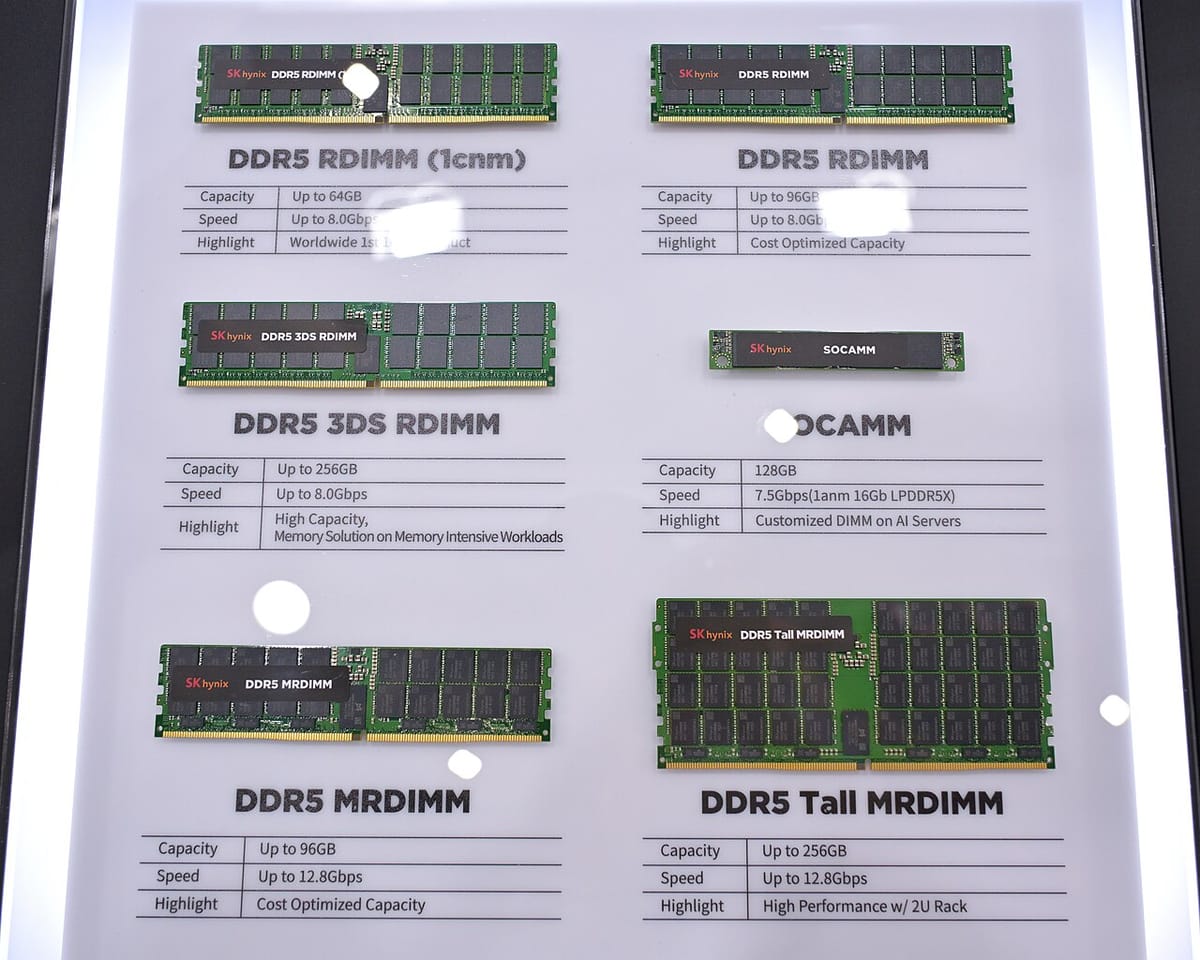
Featured image: 4300streetcar, SK Hynix DDR5 form factors, CC BY 4.0, Wikimedia Commons