Why Your Windows Sweat in Winter, and How to Stop It
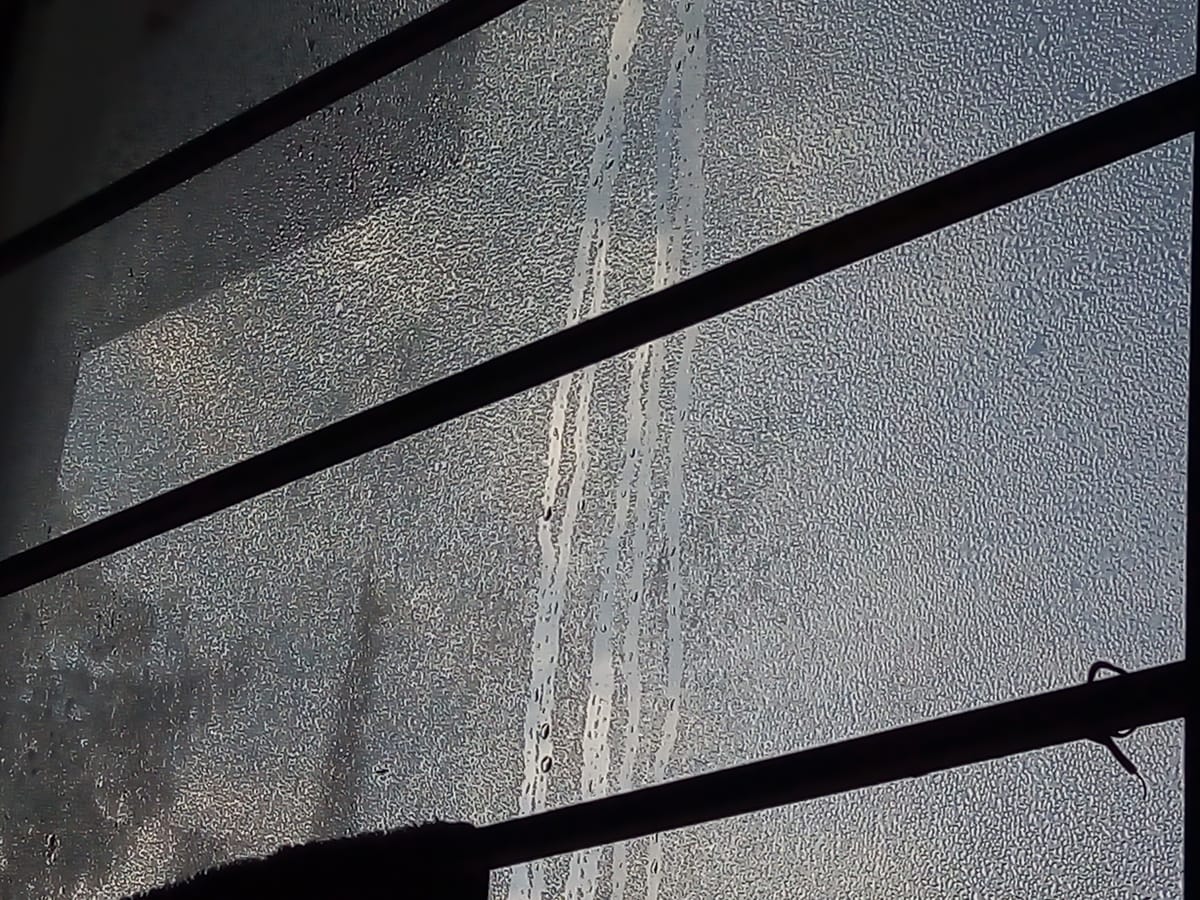
Water on the inside of your windows in winter means one thing: the glass is colder than the dew point of your indoor air. You fix it from two directions, by lowering indoor humidity (usually to around 30–40% when it's freezing outside) and by keeping the glass surface warmer. If the fog is trapped between the panes, that's a different problem: the window's seal has failed, and no amount of ventilation will clear it.
Why does condensation form on the inside of windows in winter?
Condensation appears whenever a surface is colder than the dew point of the air touching it. A Canadian Building Digest from the National Research Council of Canada puts it plainly: inside window condensation occurs "whenever surface temperature falls below the dew-point temperature of the room" (NRC CBD-4).
Windows are usually the coldest surface in a heated room, so they hit that point first. As NDSU Extension notes, "the colder the weather outside, the greater the chances of window condensation inside." The glass gets colder as the temperature drops outside, while your home keeps adding moisture to the air.
Where does all that indoor moisture come from?
Mostly from ordinary living. NDSU Extension estimates that each person adds about 3 pints (roughly 1.4 liters) of water vapor to the air every day just by breathing. Showers, cooking, drying laundry indoors, and humidifiers add more. In a tightly sealed home, that moisture has fewer ways to escape in winter, so humidity creeps up until the windows show it.
That's why the U.S. EPA calls condensation "a sign of high humidity." Water on several windows throughout the house points to whole-house humidity; water on just one window more often points to that window itself.
What indoor humidity should you aim for in winter?
Somewhere between 30% and 40% for most homes in freezing weather, and lower in a deep cold snap. The EPA's general advice is to keep indoor humidity below 60%, ideally between 30% and 50%. NDSU Extension narrows that for winter: aim for about 40%.
The catch is that the "safe" number depends on your windows and the outdoor temperature. The NRC digest's figures show how much glazing matters:
| Window type | Glass surface temp. at 40°F (4°C) outside | Max indoor humidity before condensation |
|---|---|---|
| Single pane | about 47°F (8°C) | about 44% |
| Double pane | about 59°F (15°C) | about 68% |
Source: NRC Canadian Building Digest CBD-4, Table I (15 mph wind, no sun).
And as it gets colder, the limits drop fast:
- Single glass: humidity above 25% can't be held without condensation once it's below 20°F (−7°C) outside (NRC).
- Double pane: at 40% indoor humidity, condensation should start appearing when it dips below 0°F (−18°C) outside (NDSU).
- Triple pane: at the same 40%, condensation shouldn't show until it's closer to −40°F (−40°C).
The practical takeaway: buy an inexpensive hygrometer, and when a cold front arrives, lower your humidifier setting before the windows start dripping.
How do you stop window condensation, step by step?
Work through these in order; the first few cost nothing.
- Measure first. Check indoor humidity with a hygrometer so you know whether you're at 35% or 60%.
- Turn down or turn off the humidifier when it's very cold outside. It's the easiest source to control.
- Run exhaust fans at the source. The EPA recommends running the bathroom fan when showering and using exhaust fans when cooking or running the dishwasher. NDSU adds a warning: make sure the fans vent outside, not into the attic, where the moisture can cause mold.
- Air out briefly. A few minutes of cross-ventilation swaps humid indoor air for cold, drier outdoor air.
- Let warm air reach the glass. Heavy curtains and blinds can trap a pocket of cold air against the window. NDSU notes that opening drapes at night reduces condensation behind them, at the cost of some extra heat loss. The NRC digest found that blowing room air across the glass raises its surface temperature, but it can also raise heat loss through that window by roughly 50–70%.
- Wipe up water promptly. The EPA advises drying wet areas within 24–48 hours to prevent mold; soaked sills and frames are where mold starts.
- Consider a heat-recovery ventilator in a very airtight house. NDSU says these air-to-air exchangers can recover as much as 70% of the heat from outgoing air while bringing in drier outdoor air.
Does a dehumidifier help with winter window condensation?
Often not much. NDSU Extension notes that dehumidifiers "generally are ineffective if humidity levels are below 50 percent," and in winter you'll usually be trying to get from the mid-40s down to the mid-30s. Ventilation and cutting moisture sources tend to do more.
Why does condensation start at the bottom or edges of the glass?
Because those are the coldest parts. In double glazing, the air between the panes is coldest at the bottom, so "condensation on inside surfaces of double windows usually occurs first at the bottom," according to the NRC digest. The spacer and frame around a sealed unit can also pull edge temperatures down. Metal frames without a thermal break are a known weak spot: the NRC says that without one, the frame condenses at roughly the same humidity as single glass, no matter how good the glass is.
So a strip of water along the bottom edge of an otherwise clear window is normal physics, not a defect, and it's a sign you're close to your home's humidity limit.
What does fog between the panes mean?
It means the seal has failed. Condensation between the panes of an insulated glass unit "is an indication the hermetic seal of the unit has been breached or compromised," as a glazing engineer wrote in The Construction Specifier. Lowering indoor humidity won't fix it, because the moisture is sealed inside the unit. The usual fix is replacing the glass unit, so check whether the window is still under the manufacturer's warranty before paying for one.
Quick reference
| What you see | Likely cause | First thing to try |
|---|---|---|
| Water on many windows | Indoor humidity too high | Lower humidifier, run exhaust fans |
| Water on one window | Colder glass or a local draft | Open curtains, check weatherstripping |
| Water along bottom edges only | Coldest part of double glazing | Lower humidity a few points in cold snaps |
| Fog between the panes | Failed insulated-glass seal | Check warranty, replace the unit |