Type something to search...
Zero-Trust Architecture in the Age of AI: Securing the Borderless Network

Zero-Trust Architecture in the Age of AI: Securing the Borderless Network

Introduction: The Death of the Castle and Moat

Historically, corporate cybersecurity was designed around the "Castle and Moat" perimeter model. You built a strong firewall (the moat) around the corporate network (the castle). Everyone inside the network was inherently trusted, and everyone outside was kept out. If you were sitting at a desk inside the corporate headquarters, you had wide access to internal servers and data.

Today, this model is dangerously obsolete. The rapid adoption of cloud computing, the permanent shift to hybrid/remote work, and the proliferation of IoT devices have completely dissolved the traditional network perimeter. To make matters worse, cyberattacks have become exponentially more sophisticated, heavily automated by Artificial Intelligence (AI) to easily breach traditional defenses.

In response, the cybersecurity industry in 2026 has universally standardized on a fundamentally different paradigm: Zero-Trust Architecture (ZTA). The core philosophy is simple but profound: "Never Trust, Always Verify."

What is Zero-Trust Architecture?

Zero-Trust is not a single product or software you can buy; it is a comprehensive strategic approach to cybersecurity. It operates on the assumption that threats exist both outside and inside the network. Therefore, no user, device, or application is granted implicit trust simply based on their physical location or network IP address.

In a Zero-Trust environment, every single request to access a resource (whether it's an employee logging into an HR portal or a microservice calling a database API) must be continuously authenticated, authorized, and strictly validated before access is granted.

The Core Principles of Zero-Trust

To understand how Zero-Trust secures the modern enterprise, we must look at its foundational pillars:

1. Verify Explicitly

Every access request is heavily scrutinized based on multiple data points. This goes far beyond just a username and password. The system evaluates:

  • User identity (via strict Multi-Factor Authentication)
  • Device health and compliance (Is the OS updated? Is the antivirus active?)
  • Location and time of request (Is an employee suddenly logging in from another continent at 3 AM?)
  • Data classification and behavioral anomalies.

2. Use Least Privilege Access

Users and applications are given only the bare minimum permissions necessary to perform their specific tasks, and only for the duration required. If a marketing manager needs to view a sales report, they are granted read-only access to that specific document, not broad access to the entire financial database. If a breach occurs, the "blast radius" is tightly contained.

3. Assume Breach

The architecture is designed as if attackers are already present inside the environment. To mitigate damage, networks are heavily micro-segmented. Instead of one large internal network, the network is broken down into tiny, isolated zones. An attacker who compromises a single laptop cannot freely move laterally across the network to access the crown jewels (the core database). End-to-end encryption is mandatory, ensuring that even if data packets are intercepted on the internal network, they cannot be read.

The Role of AI in Supercharging Zero-Trust

By 2026, managing a Zero-Trust architecture manually is impossible due to the sheer volume of access requests. This is where AI and Machine Learning become critical enablers.

  • Continuous Behavioral Authentication: AI models establish a baseline of normal behavior for every user and device. How fast do they type? What apps do they usually access? If an attacker steals a valid password but behaves slightly differently, the AI instantly detects the anomaly, revokes access, and triggers an immediate security alert.
  • Dynamic Policy Engines: AI constantly adjusts access policies in real-time based on threat intelligence. If a new global zero-day vulnerability is discovered, the AI can instantly restrict access to critical systems from any device that hasn't received the patch, without waiting for human intervention.
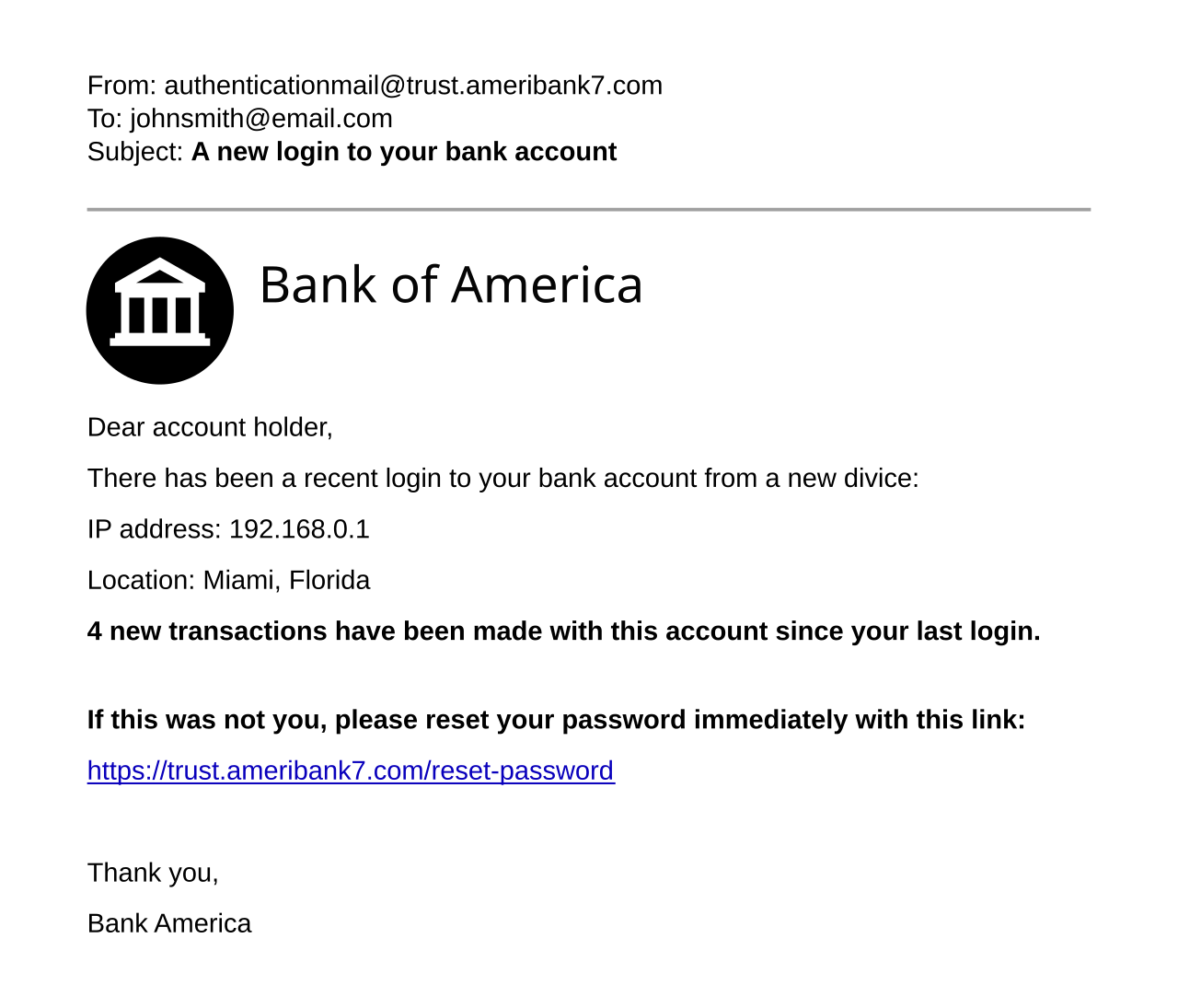
  • Combating AI-Driven Attacks: As hackers use Generative AI to craft hyper-personalized phishing emails or automate password guessing, defensive AI is required to spot the subtle patterns of these machine-generated attacks that bypass traditional spam filters and firewalls.

The Business Value of Implementing Zero-Trust

Transitioning to Zero-Trust is a complex journey, but the business benefits are undeniable:

  1. Dramatically Reduced Risk of Data Breaches: By containing lateral movement and enforcing least privilege, attackers who manage to Phish an employee are walled off from doing significant damage.
  2. Secure Enablement of Remote Work: Employees can work from any coffee shop, using any device, and securely access corporate cloud apps without relying on clunky, bottlenecked traditional VPNs.
  3. Simplified Cloud Migration: Because Zero-Trust focuses on securing the data and the user rather than the network, it allows organizations to seamlessly move workloads across multiple public and private clouds without compromising security.

Conclusion

The perimeter-based security models of the past are fundamentally broken in our hyper-connected, cloud-first world. Zero-Trust Architecture accepts the reality that breaches are inevitable. By adopting a mindset of "Never Trust, Always Verify," strictly limiting access, and leveraging AI to continuously monitor behavior, organizations can build a resilient digital infrastructure capable of withstanding the relentless and sophisticated cyber threats of the modern era.


Related Post

The Rise of Small Language Models (SLMs): Why Smaller AI is the Future for Enterprises

The Rise of Small Language Models (SLMs): Why Smaller AI is the Future for Enterprises

Introduction: Big Isn't Always Better in AI For the past few years, the AI narrative has been dominated by massive Large Language Models (LLMs) like GPT-4, Gemini, and Claude. These models are te
Spatial Computing: Blending the Digital and Physical Worlds in 2026

Spatial Computing: Blending the Digital and Physical Worlds in 2026

Introduction: Moving Beyond the Flat Screen For the past forty years, our interaction with the digital world has been confined to flat, two-dimensional screens—first the chunky monitors of deskto

Digital Twins: Creating Virtual Mirrors of the Real World for Predictive Analytics

Digital Twins: Creating Virtual Mirrors of the Real World for Predictive Analytics

Introduction: Simulating Reality Before Acting In the past, predicting the wear and tear of a jet engine or anticipating traffic bottlenecks in a growing city relied heavily on historical data an

Multimodal AI: Teaching Machines to See, Hear, and Understand the World

Multimodal AI: Teaching Machines to See, Hear, and Understand the World

Introduction: Moving Beyond Text-Only AI In the early days of the Generative AI boom, models like GPT-3 were entirely unimodal—they could only process and output text. While their ability to writ
AI-Assisted Software Engineering: How AI is Rewriting the Rules of Coding

AI-Assisted Software Engineering: How AI is Rewriting the Rules of Coding

Introduction: The End of the "Human Typewriter" Era For decades, the core image of a software engineer was someone hunched over a keyboard, manually typing thousands of lines of syntax, hunting d

Post-Quantum Cryptography (PQC): Securing Data Against Tomorrow's Supercomputers

Post-Quantum Cryptography (PQC): Securing Data Against Tomorrow's Supercomputers

Introduction: The Looming Quantum Threat For decades, the entire foundation of internet security—from online banking and secure messaging to state secrets and cryptocurrencies—has relied on a mat

How to Prepare for the AI Search Engine Era: Your Ultimate 2026 Trend Guide

How to Prepare for the AI Search Engine Era: Your Ultimate 2026 Trend Guide

Have you ever tossed a quick, messy question into a search bar and been amazed when the AI perfectly summarized exactly what you needed? Those days of frantically clicking through a list of ten blue

The Great Creator Burnout: Why YouTubers Are Quitting

The Great Creator Burnout: Why YouTubers Are Quitting

If you spend any time on YouTube, you've definitely noticed the trend: massive, successful creators with millions of subscribers posting videos titled "I'm Quitting" or "Taking a Break." It's happeni

The Unexpected Shift in the EV Market: Hybrids Make a Comeback

The Unexpected Shift in the EV Market: Hybrids Make a Comeback

Everyone said the internal combustion engine was dead and we'd all be driving pure Electric Vehicles (EVs) by now. But if you look at the actual sales numbers right now, there's a massive plot twist

The Terrifying Rise of Ultra-Fast Fashion

The Terrifying Rise of Ultra-Fast Fashion

For years, we thought brands like Zara and H&M were the pinnacle of "Fast Fashion." They could spot a trend on the runway and have cheap knock-offs in stores within weeks. But a new monster has emer

The End of Scripted NPCs: How Generative AI is Changing Gaming

The End of Scripted NPCs: How Generative AI is Changing Gaming

We've hit a wall with video game graphics. Sure, ray tracing looks nice, but a prettier puddle reflection doesn't fundamentally change how a game feels. What is about to change gaming forever is th

The 'Return to Office' Mandates Are Failing Spectacularly

The 'Return to Office' Mandates Are Failing Spectacularly

We need to talk about the absolute mess that is the corporate "Return to Office" (RTO) mandate. For the past year, CEOs have been sending out passive-aggressive emails demanding everyone come back to

The Silent Revolution: How On-Device AI is Changing Our Gadgets

The Silent Revolution: How On-Device AI is Changing Our Gadgets

Have you noticed your phone or computer getting surprisingly smart lately without even needing an internet connection? We are moving past the days when every little AI task required a strong Wi-Fi si

The Death of Traditional Search: Why AI Engines Are the New Standard

The Death of Traditional Search: Why AI Engines Are the New Standard

Honestly, when was the last time you Googled a complex question and actually got a straight answer without scrolling past four ads and a 2,000-word SEO-optimized recipe blog? Exactly. That's exactly

The Modern Sleep Epidemic: Why We Are All Exhausted

The Modern Sleep Epidemic: Why We Are All Exhausted

Be honest: how many hours of actual, high-quality sleep did you get last night? If you're like the vast majority of adults right now, the answer is probably "not enough." We are living through a mas

The Dumb Truth About the 'Smart Home' Revolution

The Dumb Truth About the 'Smart Home' Revolution

Ten years ago, tech companies promised us a utopian "Smart Home." Our fridges would order milk when we ran out, our lights would sync perfectly with our moods, and our houses would practically run th

The Rise of Smart Rings: Why Your Next Wearable Might Not Be a Watch

The Rise of Smart Rings: Why Your Next Wearable Might Not Be a Watch

For years, if you wanted to track your steps, monitor your sleep, or keep an eye on your heart rate, the answer was obvious: slap a smartwatch or a fitness band on your wrist. But recently, a much sm

The Era of 'Social' Media is Over. Welcome to 'Recommendation' Media

The Era of 'Social' Media is Over. Welcome to 'Recommendation' Media

Do you remember when you used to log onto Instagram or Facebook specifically to see what your actual, real-life friends were doing? You'd see photos of their vacations, their dogs, or what they had f

AR Smart Glasses & Spatial Computing: How They Are Changing Our Daily Lives in 2026

AR Smart Glasses & Spatial Computing: How They Are Changing Our Daily Lives in 2026

Just a few years ago, when you heard 'Virtual Reality (VR)' or 'Augmented Reality (AR)', you probably pictured someone flailing around with a heavy, clunky headset covering half their face, right? Th

Subscription Fatigue: Why We Are All Canceling Our Streaming Services

Subscription Fatigue: Why We Are All Canceling Our Streaming Services

Remember when Netflix was $8 a month, had almost every movie you actually wanted to watch, and the entire pitch was "it's better than cable"? Yeah, those days are completely dead and buried. Welcome