Type something to search...
Sovereign AI: Why Enterprises and Nations Are Reclaiming Their Tech Stacks in 2026

Sovereign AI: Why Enterprises and Nations Are Reclaiming Their Tech Stacks in 2026

If you were paying attention to the AI landscape a couple of years ago, the mantra was simple: "Bigger is always better, and the cloud is the only way." We were all gleefully shipping our most sensitive corporate data off to massive, centralized, trillion-parameter models hosted by three or four tech giants. The convenience was undeniable, but a quiet unease was brewing.

Fast forward to 2026, and the narrative has aggressively pivoted. The defining buzzword in boardrooms and government tech committees isn't just about agentic capabilities or reasoning models—it's Sovereign AI.

We are witnessing a massive pendulum swing back toward localized control. Let’s talk about why the smartest organizations are pulling their AI infrastructure back in-house and exactly what "Sovereign AI" means for the future of tech.

What Actually is Sovereign AI?

At its core, Sovereign AI is about autonomy and control. It is the ability of a nation, or a large enterprise, to produce artificial intelligence using its own infrastructure, data, workforce, and business networks, independent of foreign providers or hyper-centralized public clouds.

It means that when an AI model processes your company's proprietary source code, patient health records, or national defense strategies, that data never traverses the open internet to sit on a server in another jurisdiction. The hardware, the model weights, and the inference engine all live within a heavily guarded, legally compliant "walled garden" owned by the organization.

The Wake-Up Call for Enterprises

So, why the sudden rush to reclaim the tech stack in 2026? Having consulted with several enterprise IT leaders recently, a few distinct triggers stand out:

The IP Leakage Nightmare Early on, a few high-profile blunders made headlines when employees accidentally copy-pasted proprietary trade secrets into public AI chatbots, effectively training the AI on their company's IP. Enterprises realized that sending data to public endpoints was a catastrophic security risk. Sovereign AI solves this by keeping the models completely local, often entirely air-gapped.

Regulatory Whiplash Data residency laws have become incredibly strict globally. If you operate in Europe, healthcare data simply cannot leave the region. Sending localized customer data to a generic US-based API endpoint is no longer legally viable in many jurisdictions. Sovereign AI ensures compliance by default because you physically own the data center where the compute happens.

Vendor Lock-In and Economics Renting inference time from tech giants is cheap when you are just playing around. But as AI has become deeply embedded in high-volume enterprise workflows, the API costs have skyrocketed. Running specialized, open-source models (like advanced variations of LLaMA or DeepSeek) on private bare-metal infrastructure has proven significantly more cost-effective at scale. You aren't paying the "cloud tax."

Governments Are Leading the Charge

It isn't just corporations driving this trend; nations are recognizing that AI capability is a matter of national security.

Relying on another country's infrastructure for your nation's critical AI workloads is seen as a strategic vulnerability in 2026. We are seeing massive state-sponsored investments in building Sovereign AI factories—localized data centers powered by localized energy grids, running models trained specifically on the language, culture, and values of the nation.

This localization also prevents the cultural homogenization that occurs when the whole world relies on a model trained predominantly on a specific slice of Western internet data.

The Infrastructure Shift: Bare Metal is Back

This shift toward Sovereign AI has created a fascinating ripple effect in the hardware space. A few years ago, everyone wanted to be entirely serverless. Now? Bare metal is back in fashion.

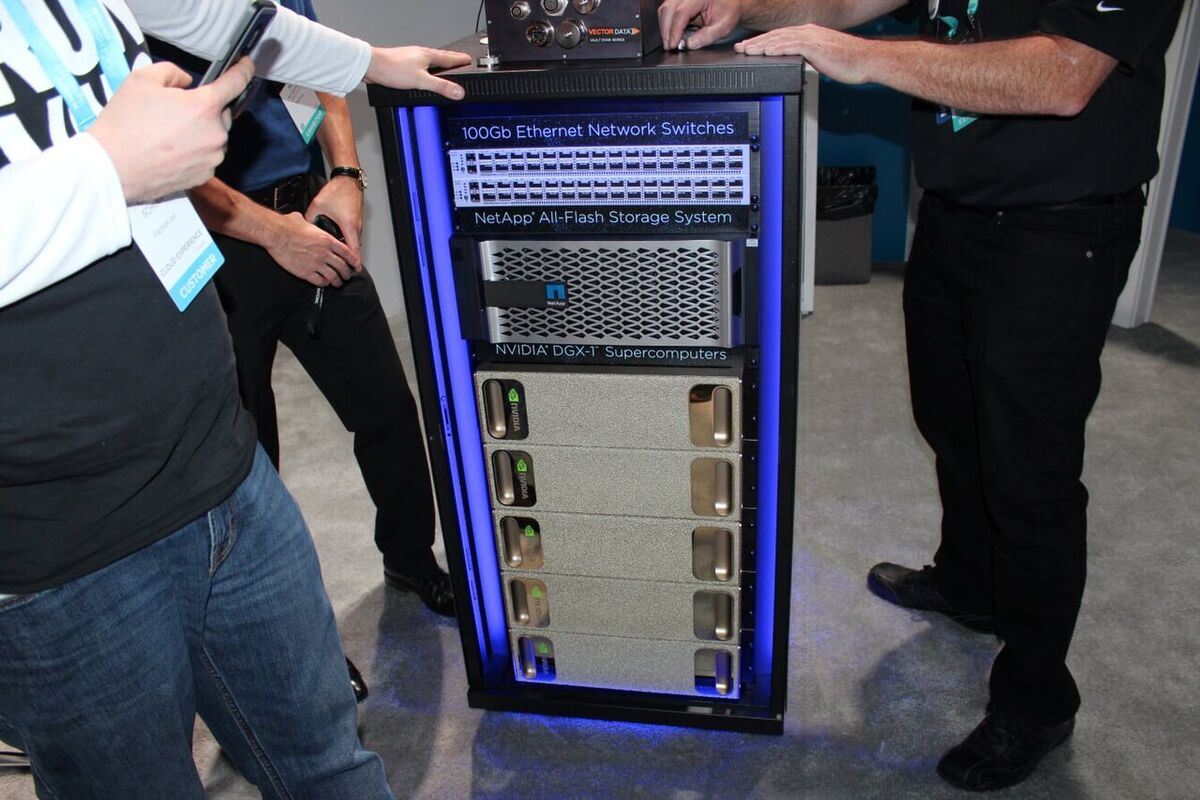
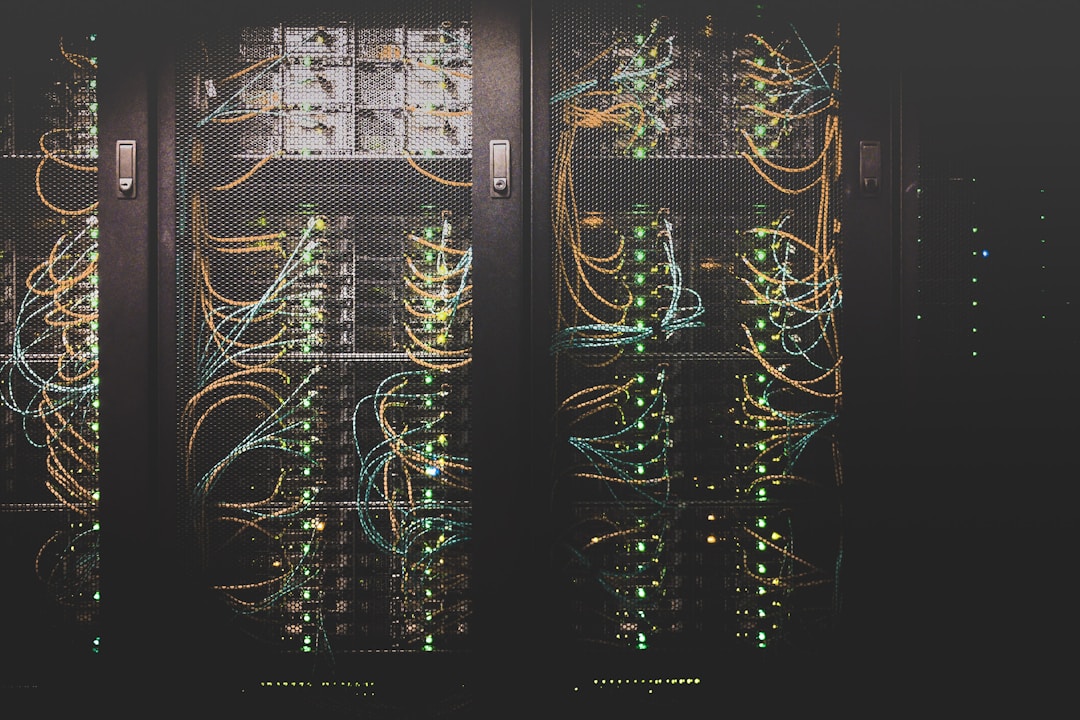
Enterprises are investing heavily in private, high-density AI clusters. We are seeing a boom in companies deploying liquid-cooled server racks in private colocation facilities to handle the intense thermal demands of local model training and inference. The focus has shifted from "How do we integrate this cloud API?" to "How do we orchestrate our own cluster of GPUs securely?"

The Path Forward

Building Sovereign AI isn't easy. It requires significant upfront capital for hardware, specialized talent to manage private clusters, and the operational maturity to handle model fine-tuning in-house.

However, for organizations dealing with intellectual property, national security, or heavily regulated data, it is no longer an optional luxury. The question in 2026 is no longer whether AI can do the job—it's who actually owns the brain doing the thinking.

As we continue through the year, expect to see the gap widen between companies blindly trusting public models and those who have built their own sovereign, secure, and highly optimized AI moats.

Related Post

I Replaced My Human Language Tutor with an AI Agent for a Month

I Replaced My Human Language Tutor with an AI Agent for a Month

Learning a new language is inherently frustrating. You memorize vocabulary on your commute, you ace the grammar quizzes on your phone, and then the moment a native speaker actually talks to you, your

Enterprise Agentic AI: Why We Stopped Prompting and Started Delegating in 2026

Enterprise Agentic AI: Why We Stopped Prompting and Started Delegating in 2026

A couple of years ago, we were all amazed when we first asked an AI chatbot to write a quick Python script or fix a pesky CSS bug. It felt like magic. We were basically pair programming with a very f

I Did a Gut Microbiome Test and It Changed My Diet

I Did a Gut Microbiome Test and It Changed My Diet

I’ve always been someone who eats relatively "healthy"—plenty of vegetables, lean proteins, and avoiding excessive sugar. But despite my decent habits, I still found myself dealing with afternoon ene

The Future of Cybersecurity: Zero Trust Architecture and the Role of AI

The Future of Cybersecurity: Zero Trust Architecture and the Role of AI

Introduction: The walls have collapsed, hackers are already within us Cybersecurity in the past was a ‘Castle’ and ‘Moat’ model. The method was to build a strong firewall between the company's in

Zero Trust Architecture (ZTA): A security paradigm shift in the cloud era

Zero Trust Architecture (ZTA): A security paradigm shift in the cloud era

Introduction: Collapsed walls, evolving cyber threats In the past, corporate security strategies were like building a solid wall. Based on the dichotomous mindset that the company's internal netw

The New Topic in the AI Era: Artificial Intelligence Ethics and Data Privacy Protection Strategies

The New Topic in the AI Era: Artificial Intelligence Ethics and Data Privacy Protection Strategies

Introduction: The Shadow of Data Hidden Behind Convenience It is no longer surprising to have casual conversations with AI assistants, have them summarize complex business documents, and get code

Why Preemptive Cybersecurity Is the Most Important Tech Trend of 2026

Why Preemptive Cybersecurity Is the Most Important Tech Trend of 2026

We've all seen the headlines. Another major company hit by a ransomware attack, millions of user records leaked, and operations shut down for weeks. For a long time, the standard playbook for dealing

Why I Finally Handed My Busywork Over to Agentic AI in 2026

Why I Finally Handed My Busywork Over to Agentic AI in 2026

Let's be honest: a couple of years ago, we were all thrilled when a chatbot could write a decent email or summarize a long meeting transcript. It felt like magic. But soon enough, the honeymoon phase

The Reality of Coding with Autonomous AI Agents in 2026

The Reality of Coding with Autonomous AI Agents in 2026

Hey everyone! It's been a wild ride these past few years in the tech world, right? If you're anything like me, you've probably been constantly bombarded with news about Autonomous AI Agents. We a

The Reality of Brain-Computer Interfaces: Where Neuralink and BCI Tech Stand in 2026

The Reality of Brain-Computer Interfaces: Where Neuralink and BCI Tech Stand in 2026

Remember when controlling a computer with your mind sounded like pure science fiction? Well, the future arrived a bit faster than most of us anticipated. If you haven't been paying close attention to

Why Confidential Computing is the Must-Have Tech Trend for 2026

Why Confidential Computing is the Must-Have Tech Trend for 2026

We all know the feeling of hesitating before hitting "upload" on a sensitive document. Even with passwords, encryption, and firewalls, handing our data over to the cloud still requires a massive leap

Digital Provenance: How We Will Verify Truth in the 2026 AI Era

Digital Provenance: How We Will Verify Truth in the 2026 AI Era

Have you ever found yourself squinting at a viral photo on social media, trying to figure out if it's real or if an AI generator cooked it up? You are definitely not alone. As generative AI models be

Are Humanoid Robots Actually Ready to Do Our Laundry in 2026?

Are Humanoid Robots Actually Ready to Do Our Laundry in 2026?

Hey everyone! If you've spent any time online this year, you've probably seen the viral videos. A sleek, slightly uncanny Humanoid Robot gracefully picking up an egg, folding a t-shirt, or servin
The Rise of Inference Economics: How I Slashed My Cloud Computing Bill by 80% Using Specialized Hardware in 2026

The Rise of Inference Economics: How I Slashed My Cloud Computing Bill by 80% Using Specialized Hardware in 2026

Hey folks! Let's have a real talk about something that's probably keeping a lot of indie hackers and CTOs awake at night in 2026: the absolute nightmare that is cloud computing costs for AI applicati

Replacing My SaaS Subscriptions with Open-Source AI Agents and n8n: A 6-Month Experiment

Replacing My SaaS Subscriptions with Open-Source AI Agents and n8n: A 6-Month Experiment

Hey everyone! It’s been an incredible year for automation so far, hasn't it? If you're like me, you probably noticed your monthly SaaS bills creeping up over the past few years. Between project manag
Living with Physical AI: How Smart Robotics Actually Changed My Daily Routine in 2026

Living with Physical AI: How Smart Robotics Actually Changed My Daily Routine in 2026

For the last decade, science fiction promised us robot butlers, but reality gave us little plastic pucks that inevitably got stuck on our living room rugs. The gap between "smart home robotics" and a
The Rise of Polyfunctional Robots: Why 2026 is the Year Hardware Gets Smart

The Rise of Polyfunctional Robots: Why 2026 is the Year Hardware Gets Smart

If you picture a robot in a factory, you probably imagine a massive mechanical arm doing exactly one thing: welding a car door, painting a chassis, or moving a specific box from point A to point B. F

Zero-Trust Architecture in the Age of AI: Securing the Borderless Network

Zero-Trust Architecture in the Age of AI: Securing the Borderless Network

Introduction: The Death of the Castle and Moat Historically, corporate cybersecurity was designed around the "Castle and Moat" perimeter model. You built a strong firewall (the moat) around the c

Post-Quantum Cryptography (PQC): Securing Data Against Tomorrow's Supercomputers

Post-Quantum Cryptography (PQC): Securing Data Against Tomorrow's Supercomputers

Introduction: The Looming Quantum Threat For decades, the entire foundation of internet security—from online banking and secure messaging to state secrets and cryptocurrencies—has relied on a mat

The Explosion of Robotaxis: Why 2026 is the Turning Point for Autonomous Vehicles

The Explosion of Robotaxis: Why 2026 is the Turning Point for Autonomous Vehicles

Just a few short years ago, spotting a driverless car navigating city streets felt like catching a glimpse of a rare sci-fi prototype. We watched carefully as these vehicles tentatively handled inter

Why Synthetic Data is the Secret Weapon Saving the AI Industry in 2026

Why Synthetic Data is the Secret Weapon Saving the AI Industry in 2026

Lately, I've been digging deep into the latest research papers and industry chatter, and there is a massive, somewhat terrifying realization sweeping through the tech world: we are quite literally ru