The Hidden Cause of Your Afternoon Brain Fog: What a CO2 Monitor Can Reveal
- Health, Environment, Technology
- Exienent
- · Updated
Afternoon brain fog in a home office may have a simple, invisible contributor: carbon dioxide (CO2) from your own breath building up in a closed room. Research from Harvard University links indoor CO2 levels of 1,000 ppm with a noticeable decline in cognitive function, and an NDIR CO2 monitor lets you see when your room crosses that line. The fix is fresh air, not an air purifier.
If you work from home, you may know the feeling. You start the day sharp and focused, but by mid-afternoon a wall of fatigue hits. Your eyes feel heavy, your concentration shatters, and you find yourself staring blankly at your screen. It's easy to blame the post-lunch carb crash, too little coffee, or a bad night's sleep. Poor ventilation is a less obvious suspect that is worth ruling out.
Why Does CO2 Hurt Focus?
CO2 matters because concentrations rise quickly in closed rooms, and higher levels are associated with poorer thinking. When we think of "air pollution," we usually imagine smog, car exhaust, or dust. We rarely think about the air we exhale.
In a well-ventilated outdoor space, the baseline level of CO2 is roughly 400 to 420 parts per million (ppm). Human biology is optimized for this level. However, modern homes are built to be energy-efficient and airtight. When you sit in a small, closed room typing away on your keyboard, you are constantly exhaling CO2. Because the air has nowhere to go, the CO2 concentration steadily climbs.
According to research from Harvard University, cognitive function begins to noticeably decline when indoor CO2 levels reach 1,000 ppm. At 1,500 ppm or higher, symptoms like headaches, drowsiness, and brain fog become more likely, because your brain is dealing with an excess of CO2.
| CO2 level | What it means |
|---|---|
| 400–420 ppm | Outdoor baseline in a well-ventilated space |
| 1,000 ppm | Cognitive function begins to noticeably decline (Harvard research) |
| 1,500+ ppm | Headaches, drowsiness, and brain fog become more likely |
What Kind of CO2 Monitor Should You Buy?
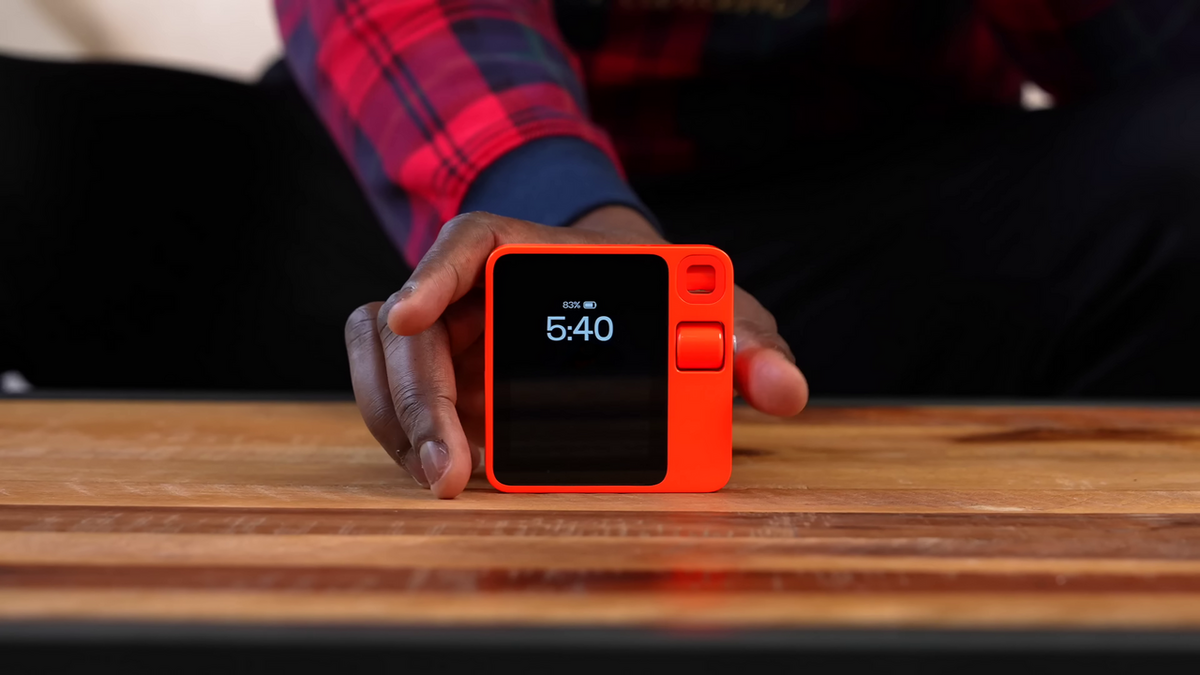
Choose a standalone monitor with an NDIR (Non-Dispersive Infrared) sensor. Cheap sensors often just estimate CO2 levels based on other airborne chemicals, which is highly inaccurate.
Place it on your desk and work as you normally would, including closing the door if that's your habit. In a small office with the door and window shut, readings can climb well past the 1,000 ppm threshold over the course of a working day. Watching the number rise alongside your energy dip turns a vague feeling into something you can measure and act on.
How Do You Lower CO2 in a Home Office?
The solution to high indoor CO2 is simple: you need fresh air. Keeping that fresh air flowing in a practical way takes a bit of strategy.
- Micro-Ventilation: You don't need to leave your window wide open, freezing in winter or sweating in summer. Cracking the window slightly can create a steady draft that keeps CO2 levels from climbing. Your monitor will show whether the gap is wide enough.
- Air Purifiers Do Not Remove CO2: This is a common misconception. HEPA filters are excellent for removing dust, pet dander, and pollen, but they do nothing for CO2. CO2 is a gas, not a particle, so running a purifier at maximum speed won't lower the reading. You must exchange indoor air with outdoor air.
- Leaving the Door Open: If it's too cold to open a window, leaving the office door open can slow CO2 buildup considerably. It allows the CO2 to disperse into the larger volume of the house, though eventually the whole house needs ventilating.
- The "Reset" Protocol: If you need total silence for a meeting and have to shut the window and door, expect the reading to climb. Afterward, open the window and door fully for a few minutes to flush the room and bring levels back toward the outdoor baseline.
Is a CO2 Monitor Worth It for Remote Workers?
I think it is one of the more useful home office purchases, arguably more so than a fancy new keyboard or a second monitor. It takes an invisible, frustrating problem and turns it into a tangible, measurable metric.
When afternoon fatigue creeps in, check the monitor before reaching for another coffee. If it reads over 1,000 ppm, crack the window; better air may help you feel more alert. CO2 is not the only cause of tiredness, though, so if fatigue persists despite good ventilation, talk to a doctor.
If you work from home in a small, enclosed room and struggle with afternoon fatigue, an NDIR CO2 monitor and an open window are a cheap first step to try.