Perovskite Solar Cells: The Breakthrough Shattering the Silicon Ceiling in 2026
- Technology
- Exienent
- · Updated
In 2026, perovskite solar cells are moving from lab experiments to actual commercial rooftops. Stacked on top of standard silicon in a tandem cell, perovskite lifts the theoretical efficiency limit from around 30% to over 43%, and companies are now shipping tandem modules and opening dedicated factories.
Imagine you've spent the last seventy years meticulously engineering an engine, tweaking every tiny part to make it better, only to suddenly realize you've been leaving half the fuel behind in the tank. That is what has been happening in the solar industry.
Why is silicon solar stuck at a ceiling?
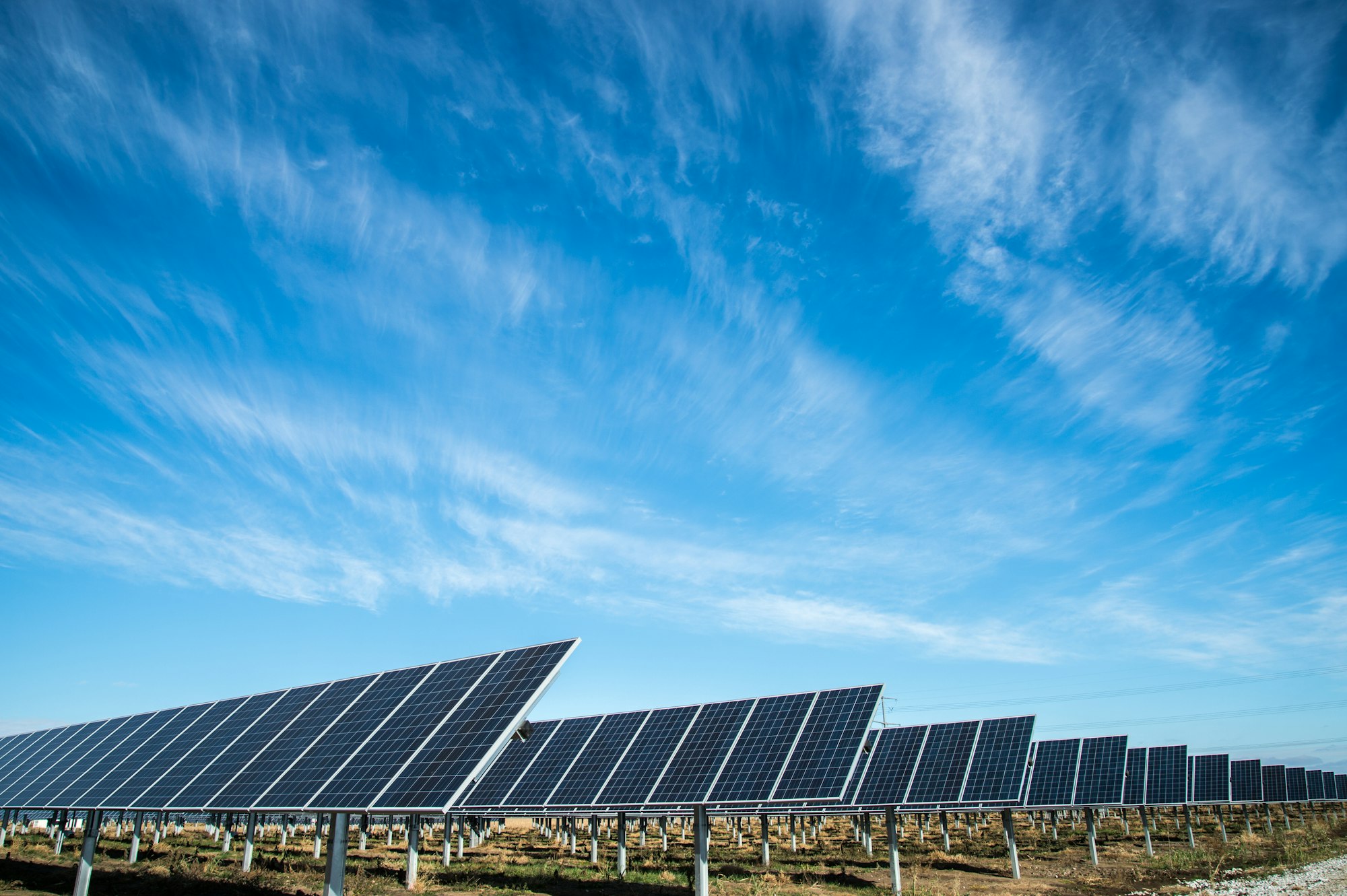
Silicon solar is limited by physics. For decades, we've relied almost entirely on crystalline silicon panels—the dark blue grids you see on nearly every rooftop and solar farm around the world. The very best commercial silicon panels convert only about 24% of sunlight into usable electricity, and a standard silicon cell will hit a hard ceiling at around 30% efficiency.
We've been bumping our heads against that ceiling for years. Now a "miracle material" called Perovskite is finally breaking through it.
What is perovskite and why is it a game changer?
Perovskite isn't a single material; it's a class of crystal structures that are incredibly good at absorbing light. More importantly, perovskite is cheap to produce and highly abundant.
The real magic happens when you pair perovskite with our old friend, silicon. Silicon is really good at absorbing red light from the sun, but it completely misses the blue light spectrum. Perovskite, on the other hand, is fantastic at absorbing blue light.
When you stack a thin layer of perovskite directly on top of a standard silicon cell, you create what's called a Tandem Cell. You are now capturing both the red and the blue light. By doing this, the theoretical efficiency limit jumps from 30% all the way up to over 43%.
In laboratory settings, companies like LONGi have already pushed tandem cell efficiency to an astonishing 34.85%. This is widely considered the biggest leap in solar physics since Bell Labs invented the original solar cell in 1954.
Why did perovskite take so long to reach the market?
Perovskite took so long because it has always been fragile. Early versions of the crystal degraded rapidly when exposed to moisture, intense heat, and UV light—which are exactly the things a solar panel is exposed to every single day on a roof.
Solving this durability problem at an industrial scale has been the holy grail for material scientists. That's why 2026 is such a pivotal year: they finally figured it out.
What is happening on the commercial front in 2026?
Perovskite tandem panels are now in commercial production:
- Commercial Shipments are Live: Companies like Oxford PV have moved beyond pilot programs. They successfully shipped their first 24.5% efficiency tandem modules to U.S. utility customers and are rolling out 26% efficiency modules this year.
- Massive Manufacturing Plants: Startups aren't just tinkering in labs anymore. Companies like Tandem PV are opening massive 65,000-square-foot automated factories to pump out large perovskite-coated glass panels.
- The Global Race: It's not just a US or European effort. Huge gigawatt-scale factories are going online in China, signaling that the technology is ready for massive global deployment.
What does perovskite mean for homeowners and the grid?
The shift to perovskite tandem panels is going to dramatically change the economics of renewable energy.
If you are a homeowner putting panels on your roof, higher efficiency means you need significantly fewer panels to generate the same amount of electricity. If you have limited roof space, you can generate enough power to run your home and charge your EV without needing a massive installation.
On a macro level, utility companies can generate vastly more power from the exact same footprint of land. As production scales and the manufacturing costs of these tandem cells drop, the overall cost of solar energy will fall even further.
Silicon got us to where we are today, but perovskite is the fuel that will power the next leap in clean energy. Keep an eye on solar installations this year—those panels are about to get a whole lot more powerful.