Passive Radiative Cooling Paint for Your Roof: Can It Replace Your AC?
- Environment, Technology, Hardware
- Exienent
- · Updated
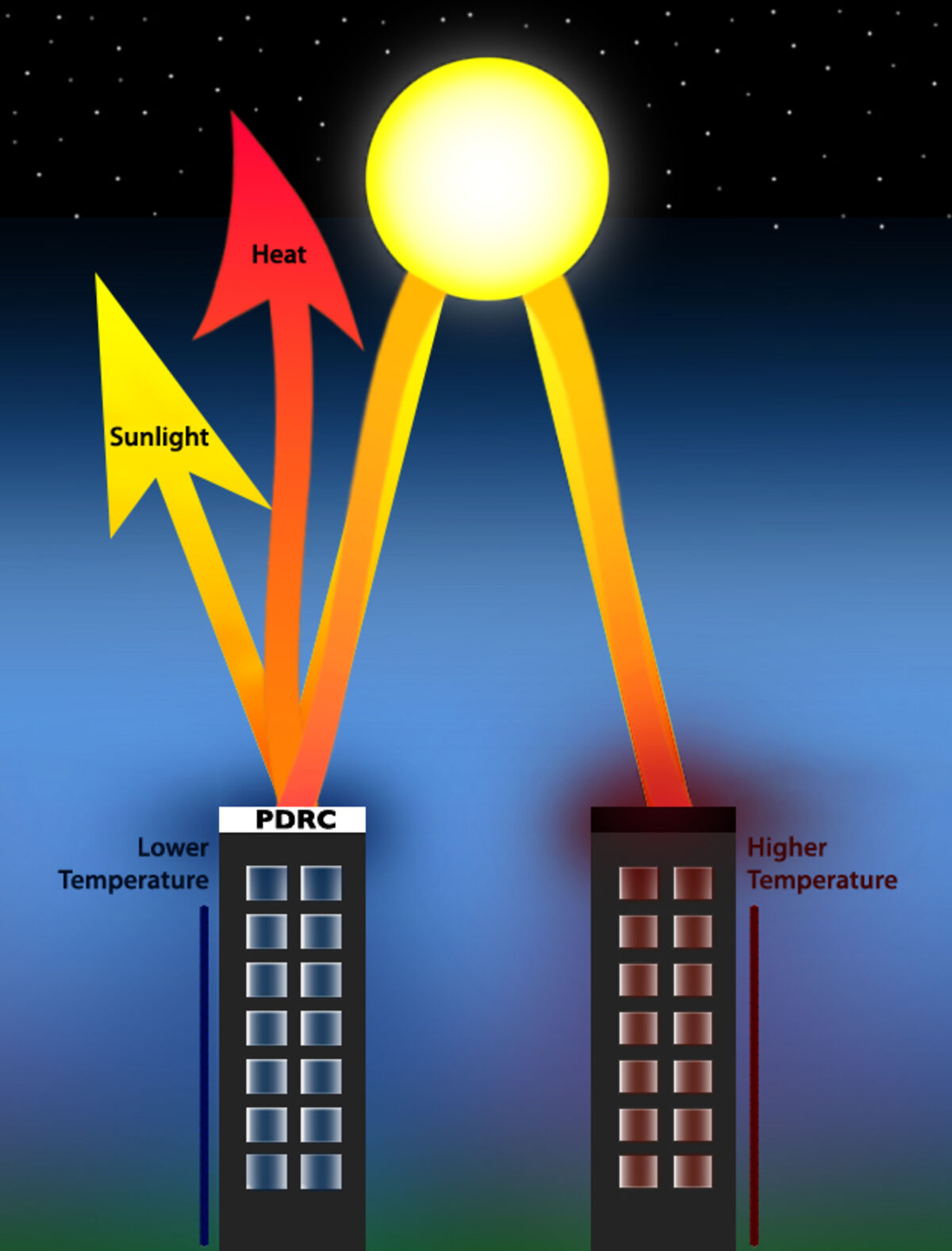
Passive radiative cooling paint is a roof coating that reflects up to 98% of incoming sunlight and radiates its own heat straight out to space, so a coated surface can become cooler than the surrounding air even in direct sun, without using any electricity. For homeowners facing summer cooling bills, it can cut how much heat reaches the house in the first place, though results will vary by home and climate.
Why look at radiative cooling instead of a bigger AC?
The heatwaves of recent summers have kept air conditioners running for months and pushed electricity bills up. Solar panels are expensive upfront, and adding more insulation only goes so far. Passive radiative cooling, one of the most exciting climate-tech breakthroughs of 2026, takes a different approach: stop the heat at the roof. It sounds like rocket science, but the core idea is surprisingly simple.
What is passive radiative cooling?
Passive radiative cooling is a way of shedding heat by reflecting sunlight and emitting infrared energy into space. Normally, when the sun beats down on a roof, materials like asphalt shingles or dark metal absorb the heat. That heat radiates down into the attic and eventually into the living space, turning the house into an oven.
Traditional white paint helps by reflecting some visible sunlight, but Passive Radiative Cooling materials take it to a completely different level. They do two things simultaneously:
- Extreme Reflection: They reflect up to 98% of all incoming solar radiation (both visible light and heat-generating near-infrared light).
- Thermal Emission: This is the "magic" part. The material is engineered at a microscopic level to emit its own heat back out into space at a very specific infrared wavelength (between 8 and 13 micrometers).
Why that specific wavelength? Because our Earth's atmosphere is transparent to it. The heat doesn't get trapped by greenhouse gases; it travels straight through the atmosphere and into the freezing vacuum of outer space.
Because of this dual action, a surface coated with this material can actually become colder than the ambient air temperature, even in direct, blazing sunlight. It cools things down without using a single watt of electricity.
How is radiative cooling paint applied?
Radiative cooling paint can go on much like ordinary exterior paint. Newly commercialized versions look and feel like thick, premium exterior latex paint. Application can be as straightforward as cleaning the roof thoroughly and rolling on two thick coats with a standard heavy-duty roller. The finish dries to a brilliant, almost blindingly bright white. From the street, it simply looks like a clean, white roof.
What results can you expect during a heatwave?
The effects show up in three places, though the size of each depends on the building and the weather:
- The Roof Surface: Even at the afternoon peak of a heatwave, a coated roof can stay cool to the touch, and an infrared thermometer may read the surface below the surrounding air temperature.
- The Attic: An attic that normally turns into a sauna in summer may stay much closer to the outdoor ambient temperature.
- The Living Space: With less heat coming through the roof, the house can stay comfortable for longer, and the air conditioner may need to run less often, especially outside the hottest days.
Can radiative cooling lower energy bills and emissions?
It can reduce cooling energy use, and with it monthly utility bills, because less heat enters the house. How much you save, and how quickly the paint pays for itself, depends on your climate, roof, and existing insulation.
Beyond personal savings, the potential for this tech is massive. If every building in a city adopted passive radiative cooling, we could drastically reduce the urban heat island effect, lower the massive strain on our electrical grids, and significantly cut down on the greenhouse gas emissions caused by air conditioning.
Is passive radiative cooling paint worth it?
I think it is one of the most promising upgrades a homeowner can consider. It requires zero electricity, has no moving parts to break down, and works quietly every day.
If you are a homeowner struggling with summer cooling costs, don't just look at upgrading your AC unit. Look at stopping the heat from entering your house in the first place. This technology is becoming far more accessible, and it is worth comparing against other cooling upgrades for your home.