$300 Carbon Plate 'Super Shoes' for Amateur Runners: Are They Cheating?
Carbon plate "super shoes" such as the Nike Alphafly (nearly $300) do give a genuine energy-return boost, but for most everyday jogging they are the wrong tool. They are expensive, wear out faster than normal trainers, feel unstable at slow speeds, and shift strain onto muscles your body may not be ready for. Their real value is on race day.
Over the last year, it has become impossible to ignore the bright, neon-colored monsters appearing on the feet of seemingly everyone at local 5K races. They look like hovercrafts attached to sneakers. These are the infamous Carbon Plate "Super Shoes", and they have fundamentally rewritten the rules of long-distance running.
The obvious question for an average runner — someone who jogs a few times a week to clear their head and offset a sedentary desk job, with no sub-three-hour marathon in sight — is whether this heavily engineered foam and carbon fiber is worth the money, or whether it is basically cheating. Here is a breakdown for amateur runners in 2024.
What Makes a "Super Shoe" So Super?
A super shoe is not just a regular sneaker with a fancy logo. A true super shoe consists of two main technological breakthroughs working together:
- The Super Foam: Brands use proprietary foams (like PEBA) that are insanely lightweight, highly compressible, and most importantly, offer massive energy return. It doesn't just squish; it actively bounces back.
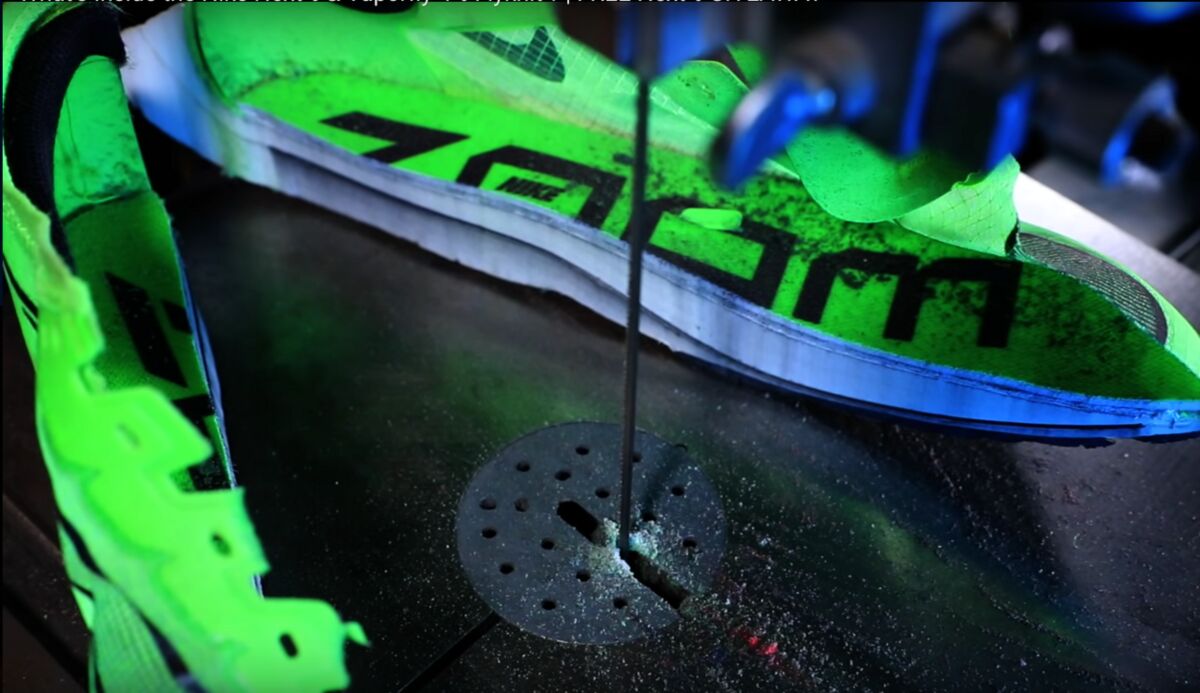
- The Carbon Fiber Plate: Buried inside that massive stack of foam is a stiff, curved plate made of carbon fiber.
When your foot strikes the ground, the thick foam compresses to absorb the shock. As you roll your foot forward to push off, the stiff carbon plate acts like a lever (or a diving board), forcing the foam to decompress rapidly and aggressively propelling you forward.
What Does Running in Carbon Plate Shoes Feel Like?
Standing still in super shoes can feel surprisingly wobbly. Because the foam stack is so incredibly high (often pushing the legal 40mm limit set by running authorities), it can feel like standing on high heels made of marshmallows. They are unstable and a bit awkward to walk in.
Once you break into a jog, the picture changes. The closest comparison is running on a series of small, precisely tuned trampolines. With each step, the shoe can deliver a distinct, mechanical "pop" that pushes the heel up and rolls your momentum forward, so it can feel as though the shoe is doing part of the work for you.
That sensation can translate into a faster pace at the same perceived effort, which can make super shoes feel like a cheat code for your legs.
Are Carbon Plate Shoes Actually Cheating for Amateurs?
The speed boost is intoxicating, but $300 super shoes come with a few significant caveats for everyday amateurs:
- They Force a Specific Stride: These shoes are fiercely opinionated about how you should run. Because of the aggressive curve (the "rocker" geometry) and the stiff plate, they heavily favor a midfoot or forefoot strike. If you are a heavy heel-striker who likes to jog slowly and lazily, the carbon plate can feel clunky and fight against your natural mechanics. They practically demand that you run fast.
- The Instability Issue: The marshmallow-like instability doesn't completely go away when running. Sharp corners on the sidewalk or uneven gravel can raise the risk of rolling an ankle. They are built for going fast in a perfectly straight line on smooth asphalt.
Do Super Shoes Increase Injury Risk?
They can. While super shoes may make your lungs feel great and your times look better, they can strain muscles you don't usually think of as running muscles.
Because the shoes alter your biomechanics and drastically reduce the workload on your calves, that stress doesn't just disappear—it moves up the chain. After a first long run in carbon plates, the hamstrings and glutes may end up sore if your lower body isn't adapted to the new, aggressive gait the shoes encourage.
Sports physical therapists are reportedly seeing a wave of amateur runners developing unique foot and tendon issues because they wear super shoes for every single training run, causing certain stabilizing muscles to weaken over time. If pain persists, see a physiotherapist or doctor.
Are Carbon Plate Super Shoes Worth the Money in 2024?
If you are just looking for a comfortable shoe to jog 3 miles around your neighborhood twice a week to stay healthy, don't buy carbon plate super shoes. They are incredibly expensive, they wear out much faster than normal trainers, and they are inherently unstable at slow speeds.
However, if you are training for a specific race—whether it's trying to hit a personal best in a 10K or surviving a full marathon—the technological advantage is undeniable. The energy return is very real, and the way they protect your legs from the brutal impact of the asphalt can keep your legs feeling fresher in those late, exhausting miles.
In my view, the sensible approach is to keep them in the closet most of the time. Do everyday training in normal, durable running shoes to keep your muscles strong, and save the carbon — and that trampoline bounce — for race day.