The Pickleball Craze: Why It's So Easy to Get Hooked
Pickleball has been the fastest-growing sport in America for several years running, and the reasons are simple: it is easy to learn, it can be a genuinely good low-impact workout, and its open-play format makes it one of the easiest ways to meet people. It is not just a lawn game for retirees.
Not long ago, Pickleball sounded like some obscure game played exclusively at Florida retirement communities. By early 2024, it became impossible to ignore. Local tennis courts were overtaken by people holding oversized ping-pong paddles, and the unmistakable thwack-thwack-thwack of a plastic wiffle ball echoed through public parks. The obvious question: is it actually a good workout, or just a glorified version of standing around?
Is pickleball easy to learn?
Yes—the learning curve is close to non-existent, especially compared with tennis. Tennis is highly technical; if your grip or swing path is slightly off, the ball goes into orbit, and beginners can spend much of their time chasing stray balls into neighboring courts.
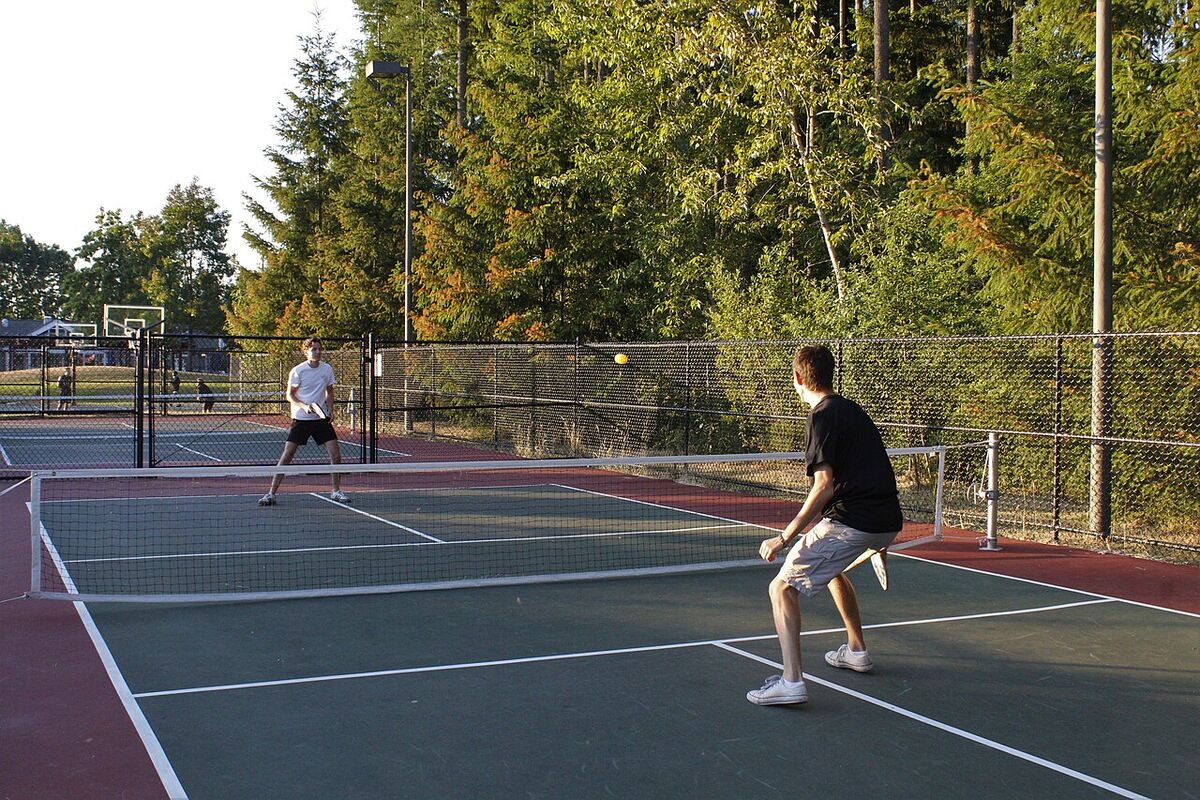
Pickleball is the exact opposite. Beginners can hold a rally soon after stepping onto the court for the first time. The paddle is lightweight, the plastic ball moves slower than a tennis ball and bounces lower, and the court is less than a third of the size of a tennis court. It is specifically designed to be forgiving.
This low barrier to entry is the secret sauce of the sport. You don't need to spend six months taking expensive lessons just to have fun. You can grab a paddle, learn the basic rules in five minutes, and immediately experience the dopamine rush of a competitive game.
Is pickleball a good workout?
It can be a better workout than it looks. Because the court is small and the game is usually played as doubles, it's easy to assume you won't break a sweat.
While you aren't sprinting long distances like in tennis, Pickleball is a game of explosive, lateral micro-movements. You are constantly in a squatted 'ready position,' shuffling side-to-side, lunging for dinks at the net, and engaging your core to reach for volleys.
A long session can leave your glutes and thighs feeling it, and intense rallies can push your heart rate up noticeably. It can work as a relatively low-impact cardiovascular workout disguised as a fun social activity, so you can build agility without feeling like you are "exercising." If you have joint or heart concerns, check with a doctor before starting any new sport.
Why is pickleball so social?
Pickleball's culture may be its most surprising feature. Unlike traditional gym culture (which is often solitary and involves staring at your phone between sets), Pickleball is inherently social. The standard format is 'open play.' You show up, put your paddle in a queue, and rotate in with random partners and opponents.
That means you may find yourself playing alongside college students, CEOs, stay-at-home parents, and 70-year-olds who beat you with strategic drop shots. The proximity of the players on the small court encourages constant banter. In a highly digital, isolated 2024, the Pickleball court has accidentally become the new town square, and it can be one of the easiest ways to meet new people and make friends as an adult.
Is pickleball just a fad?
Probably not. The noise complaints from neighbors living near courts certainly suggest growing pains, but the sport itself looks here to stay.
It hits a triad that very few activities achieve: it is easy to learn, it can provide a genuinely good physical workout, and it fosters immediate social connection. If you have been looking for a way to get off the couch, get your heart rate up, and actually enjoy the process, it is worth trying. Buy a paddle, head to your local park, and see whether it hooks you too.