Save Your Fingers: The Brilliant Clothespin Hack for Hammering Nails
- Lifestyle, Review
- Exienent
- · Updated
The easiest way to hammer a small nail without smashing your fingers is to hold the nail with a spring-loaded clothespin instead of your fingertips. The clothespin grips the nail straight, keeps your hand several inches from the impact zone, and costs practically nothing.
Why Is Hammering Small Nails So Risky?
Small nails are hard to hold steady, so your fingers end up right where the hammer lands. If you've ever tried to hang a picture frame or assemble a tricky piece of flat-pack furniture, you know the struggle. You hold a tiny, slippery nail straight with one hand while swinging a heavy hammer with the other. The nail slips, or your aim is slightly off, and whack—you smash your thumb. The throbbing pain is immediate, and the colorful language that follows usually isn't suitable for children.
Jobs like re-attaching a flimsy backing board to a bookshelf are especially tricky, because the nails are short and there is barely anything to grip. Before reaching for superglue, it is worth trying an old woodworking trick: letting a simple, everyday household item hold the nail for you.
How Do You Use a Clothespin to Hold a Nail?
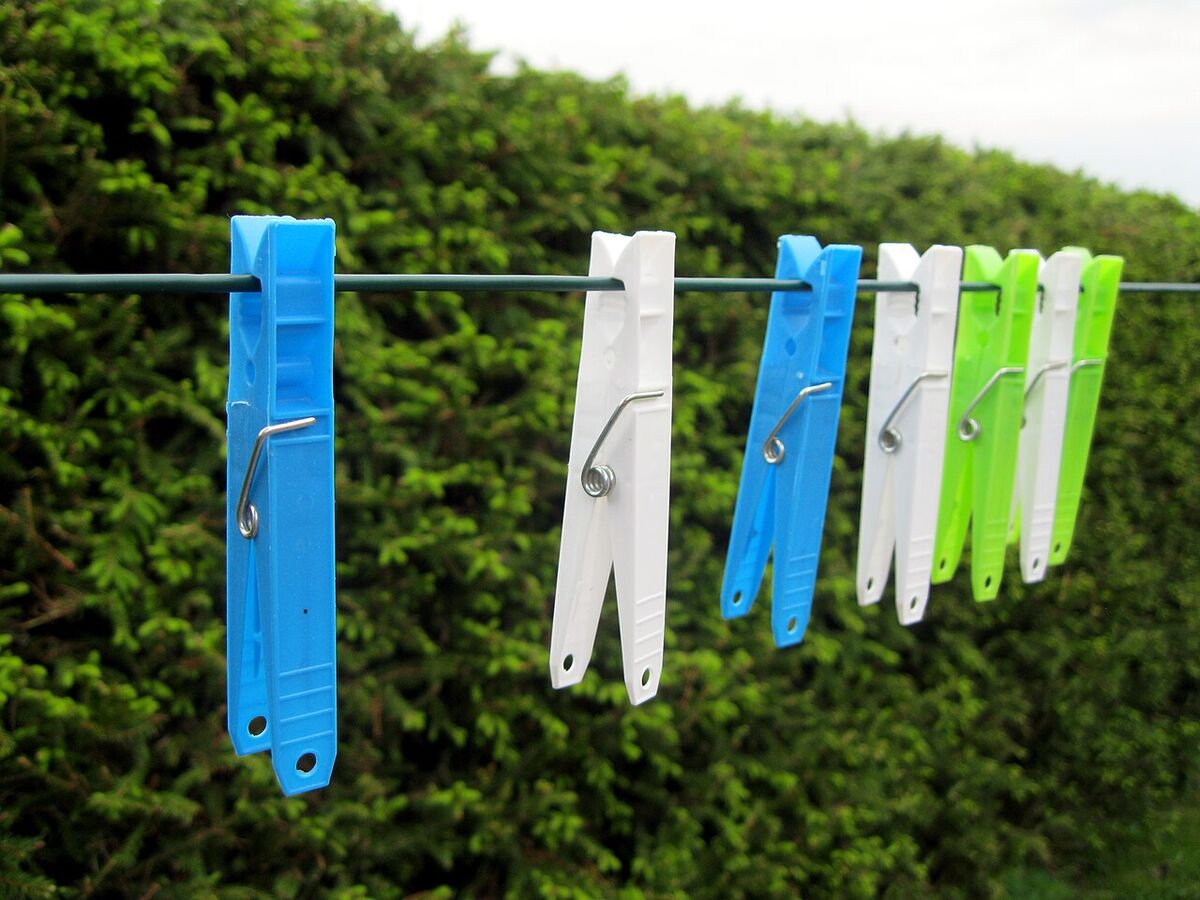
You only need two things: the nail you are trying to hammer, and a standard spring-loaded wooden or plastic clothespin.
- Pinch the clothespin: Open the clothespin just like you would to hang laundry.
- Grip the nail: Insert the nail into the jaws of the clothespin. You want the clothespin to grip the nail firmly right below the head. There are usually little grooves in the jaw of a wooden clothespin that are perfect for holding a nail straight.
- Position it on the wall: Instead of holding the nail with your fingers, hold the back end of the clothespin. Place the point of the nail exactly where you want it on the wood or wall.
- Hammer away: Now, swing your hammer! You can give it a solid thwack without fear, because your hand is safely several inches away from the impact zone.
- Release and finish: Once the nail is driven in far enough to stand on its own, simply unclip the clothespin and pull it away. Then, finish hammering the nail flush with the surface.
Why Is a Clothespin Better Than Using Your Hands?
A clothespin is safer, steadier, and reaches places your fingers can't. It might seem silly to use a tool to hold another tool, but the benefits are significant, especially for beginners or anyone doing precise work.
Firstly, safety. This is the obvious one. A clothespin acts as an extension of your fingers. If your hammer slips, it hits the wooden pin, not your fragile finger bones. It takes away much of the anxiety of swinging a hammer in tight spaces.
Secondly, stability and precision. Our fingers naturally shake and twitch, especially when holding a tiny, sharp object. A clothespin provides a much larger, more stable handle. It holds the nail perpendicular to the surface, which helps prevent the nail from bending sideways when you hit it—a very common problem when using thin finishing nails.
Lastly, reach. Sometimes you need to hammer a nail into a tight corner where your hand literally won't fit to hold it. A clothespin gives you that extra few inches of reach to get into those awkward spots.
Is the Clothespin Trick Worth Keeping in Your Toolbox?
Yes. Keeping a dedicated "hammering clothespin" inside your toolbox is a ridiculously simple, practically free way to make small-nail jobs far less frustrating. If you dread DIY projects that involve tiny nails, try it on your next picture-hanging project—your thumbs will thank you!